Buy ciné.be ?
We are moving the project
ciné.be .
Are you interested in purchasing the domain
ciné.be ?
domain@kv-gmbh.de · 0541-91531010
Buy ciné.be ?
What is the difference between standard enthalpy of formation, enthalpy of formation, and reaction enthalpy?
The standard enthalpy of formation is the enthalpy change that occurs when one mole of a compound is formed from its elements in their standard states. Enthalpy of formation is the enthalpy change that occurs when one mole of a compound is formed from its elements in their standard states, but it can be under non-standard conditions. Reaction enthalpy is the enthalpy change that occurs in a chemical reaction, which can be exothermic (heat is released) or endothermic (heat is absorbed). **
What is enthalpy?
Enthalpy is a thermodynamic property of a system that represents the total energy of the system, including its internal energy and the energy required to maintain constant pressure. It is often denoted as H and is expressed in units of joules. Enthalpy is important in understanding and analyzing processes such as chemical reactions and phase changes, as it provides a measure of the heat content of a system. In practical terms, enthalpy change is often used to quantify the heat absorbed or released during a process at constant pressure. **


Similar search terms for Enthalpy
Top-Angebote
Products related to Enthalpy:
-
vidaXL Film pour fenêtre dépoli gris 45x500cm PVCCe film pour vitres est le choix idéal pour créer un espace privé, mais aussi pour transformer et égayer votre intérieur. Protection de l’intimité : ce film teinté pour fenêtres offre une excellente protection de l’intimité, garantissant que personne ne puisse voir à l’intérieur ni vous déranger. Que vous viviez près d’un jardin ou dans une rue animée, vous pouvez profiter de votre intimité en toute sérénité. Transmission douce de la lumière : utilisez ce film teinté pour filtrer la lumière intense, réduire l’éblouissement et créer un environnement confortable chez vous. Il permet également de ralentir le vieillissement du mobilier et d’embellir votre intérieur. Utilisations multiples : le film teinté pour vitres peut être utilisé dans divers espaces, tels que les chambres, les salles de bains, les cuisines et les salons. Facile à utiliser : le film teinté pour vitres peut être facilement découpé pour s’adapter à différentes formes et répondre à vos besoins. Conseils d’installation : nettoyez soigneusement la surface à traiter. Mesurez la surface et découpez le film. Vaporisez de l’eau sur la surface. Retirez le film de protection transparent. Appliquez le film sur la surface ciblée. Utilisez la raclette pour éliminer les bulles d’air. Essuyez l’eau à l’aide d’un chiffon. Bon à savoir : Le produit doit être appliqué sur une surface lisse.12,80 €*Shipping: 0,00 €Secure redirect to the provider
-
vidaXL Film autoadhésif pour meubles Chêne 500x90 cm PVCAméliorez simplement votre décoration intérieure avec ce film de meubles autocollant avec des grains d'aspect de bois ! Nos films pour meubles universels sont parfaits pour portes, fenêtres, murs, meubles et tout ce qui a une surface lisse. Sa conception auto-adhésive garantit une application et un retrait faciles. Le matériau PVC peut résister à l'humidité, ce qui le rend facile à nettoyer avec un chiffon humide et offre donc une longue durabilité. Les grains distinctifs d'aspect de bois, associés à un design opaque, apporteront un charme rustique. Vous pouvez le couper en différentes tailles selon vos besoins. Faites votre mobilier neuf à nouveau à peu de frais ! Veuillez vous assurer que la surface sur laquelle vous appliquez les films est lisse et exempte de graisse et de poussière.19,40 €*Shipping: 0,00 €Secure redirect to the provider
-
vidaXL Film autoadhésif pour meubles Blanc 500x90 cm PVCAméliorez simplement votre décoration intérieure avec ce film de meubles autocollant ! Nos films pour meubles universels sont parfaits pour portes, fenêtres, murs, meubles et tout ce qui a une surface lisse. Sa conception auto-adhésive garantit une application et un retrait faciles. Le matériau PVC peut résister à l'humidité, ce qui le rend facile à nettoyer avec un chiffon humide et offre donc une longue durabilité. Vous pouvez le couper en différentes tailles selon vos besoins. Faites votre mobilier neuf à nouveau à peu de frais ! Veuillez vous assurer que la surface sur laquelle vous appliquez les films est lisse et exempte de graisse et de poussière.18,30 €*Shipping: 0,00 €Secure redirect to the provider


-
What is the difference between bond enthalpy and formation enthalpy?
Bond enthalpy is the energy required to break a specific chemical bond in a molecule, while formation enthalpy is the energy change when one mole of a compound is formed from its elements in their standard states. Bond enthalpy is specific to a particular bond within a molecule, while formation enthalpy is a measure of the overall energy change in forming a compound. Bond enthalpy is typically measured in kilojoules per mole (kJ/mol), while formation enthalpy is also measured in kilojoules per mole (kJ/mol). **
-
What is the difference between standard formation enthalpy and enthalpy change?
Standard formation enthalpy is the enthalpy change that occurs when one mole of a compound is formed from its elements in their standard states. It is a specific type of enthalpy change that is measured under standard conditions. Enthalpy change, on the other hand, is a more general term that refers to the overall change in enthalpy of a system during a chemical reaction or process, regardless of whether it involves formation of a compound or not. Enthalpy change can be positive (endothermic) or negative (exothermic), depending on whether energy is absorbed or released during the process. **
-
What is Hess's law for standard formation enthalpy and combustion enthalpy?
Hess's law states that the total enthalpy change for a reaction is the same regardless of the number of steps taken to reach the final products. This principle can be applied to standard formation enthalpies and combustion enthalpies by using a series of known enthalpy changes to calculate the overall enthalpy change for a reaction. By manipulating and combining these known enthalpies, Hess's law allows us to determine the enthalpy change for reactions that may not be easily measured directly. **
-
How to calculate the reaction enthalpy from the molar bond enthalpy?
To calculate the reaction enthalpy from the molar bond enthalpy, you need to consider the difference between the sum of the bond enthalpies of the reactants and the sum of the bond enthalpies of the products. First, calculate the total bond enthalpy of all the bonds broken in the reactants, and then calculate the total bond enthalpy of all the bonds formed in the products. The reaction enthalpy is then the difference between these two values, with the bond enthalpies of the products subtracted from the bond enthalpies of the reactants. This calculation allows you to determine whether a reaction is exothermic (releasing heat) or endothermic (absorbing heat). **

What is Hess's law equation for standard formation enthalpy and combustion enthalpy?
Hess's law states that the overall enthalpy change for a reaction is the same regardless of the number of steps taken to reach the final products. For standard formation enthalpy, the equation is: ∆Hf°(products) = ∑∆Hf°(products) - ∑∆Hf°(reactants). For combustion enthalpy, the equation is: ∆Hcomb° = ∑∆Hf°(products) - ∑∆Hf°(reactants). These equations allow us to calculate the enthalpy change of a reaction using the enthalpies of formation of the reactants and products. **
What is the difference between standard enthalpy of formation and enthalpy change?
The standard enthalpy of formation is the enthalpy change that occurs when one mole of a compound is formed from its elements in their standard states. It is a specific type of enthalpy change that is measured under standard conditions. On the other hand, enthalpy change refers to the overall change in enthalpy of a system during a chemical reaction or process, which can include various types of enthalpy changes such as enthalpy of reaction, enthalpy of combustion, or enthalpy of solution. In summary, standard enthalpy of formation is a specific type of enthalpy change that relates to the formation of a compound from its elements, while enthalpy change is a broader term that encompasses various types of enthalpy changes in a system. **
Top-Angebote
Products related to Enthalpy:
-
vidaXL Film pour fenêtre dépoli gris 0,9x100m PVCGrâce à ce film de protection anti-éclaboussures pour fenêtres, votre chambre ou votre salle de bains bénéficiera d’une plus grande intimité grâce à son aspect dépoli. Protection de l’intimité : ce film pour vitrage résistant préserve l’intimité de vos pièces et peut également servir d’élément décoratif pour les portes vitrées ou les meubles dotés de surfaces en verre. Facilité d’utilisation : il s’applique et s’enlève facilement sans laisser de résidus. Large éventail d’applications : ce film pour vitrage peut être utilisé dans divers espaces, tels que les chambres, les salles de bains, les cuisines et les salons.214,99 €*Shipping: 0,00 €Secure redirect to the provider
-
vidaXL Film pour fenêtre dépoli gris 45x500cm PVCCe film pour vitres est le choix idéal pour créer un espace privé, mais aussi pour transformer et égayer votre intérieur. Protection de l’intimité : ce film teinté pour fenêtres offre une excellente protection de l’intimité, garantissant que personne ne puisse voir à l’intérieur ni vous déranger. Que vous viviez près d’un jardin ou dans une rue animée, vous pouvez profiter de votre intimité en toute sérénité. Transmission douce de la lumière : utilisez ce film teinté pour filtrer la lumière intense, réduire l’éblouissement et créer un environnement confortable chez vous. Il permet également de ralentir le vieillissement du mobilier et d’embellir votre intérieur. Utilisations multiples : le film teinté pour vitres peut être utilisé dans divers espaces, tels que les chambres, les salles de bains, les cuisines et les salons. Facile à utiliser : le film teinté pour vitres peut être facilement découpé pour s’adapter à différentes formes et répondre à vos besoins. Conseils d’installation : nettoyez soigneusement la surface à traiter. Mesurez la surface et découpez le film. Vaporisez de l’eau sur la surface. Retirez le film de protection transparent. Appliquez le film sur la surface ciblée. Utilisez la raclette pour éliminer les bulles d’air. Essuyez l’eau à l’aide d’un chiffon. Bon à savoir : Le produit doit être appliqué sur une surface lisse.12,80 €*Shipping: 0,00 €Secure redirect to the provider
-
vidaXL Film autoadhésif pour meubles Chêne 500x90 cm PVCAméliorez simplement votre décoration intérieure avec ce film de meubles autocollant avec des grains d'aspect de bois ! Nos films pour meubles universels sont parfaits pour portes, fenêtres, murs, meubles et tout ce qui a une surface lisse. Sa conception auto-adhésive garantit une application et un retrait faciles. Le matériau PVC peut résister à l'humidité, ce qui le rend facile à nettoyer avec un chiffon humide et offre donc une longue durabilité. Les grains distinctifs d'aspect de bois, associés à un design opaque, apporteront un charme rustique. Vous pouvez le couper en différentes tailles selon vos besoins. Faites votre mobilier neuf à nouveau à peu de frais ! Veuillez vous assurer que la surface sur laquelle vous appliquez les films est lisse et exempte de graisse et de poussière.19,40 €*Shipping: 0,00 €Secure redirect to the provider
-
What is the difference between standard enthalpy of formation, enthalpy of formation, and reaction enthalpy?
The standard enthalpy of formation is the enthalpy change that occurs when one mole of a compound is formed from its elements in their standard states. Enthalpy of formation is the enthalpy change that occurs when one mole of a compound is formed from its elements in their standard states, but it can be under non-standard conditions. Reaction enthalpy is the enthalpy change that occurs in a chemical reaction, which can be exothermic (heat is released) or endothermic (heat is absorbed). **
-
What is enthalpy?
Enthalpy is a thermodynamic property of a system that represents the total energy of the system, including its internal energy and the energy required to maintain constant pressure. It is often denoted as H and is expressed in units of joules. Enthalpy is important in understanding and analyzing processes such as chemical reactions and phase changes, as it provides a measure of the heat content of a system. In practical terms, enthalpy change is often used to quantify the heat absorbed or released during a process at constant pressure. **
-
What is the difference between bond enthalpy and formation enthalpy?
Bond enthalpy is the energy required to break a specific chemical bond in a molecule, while formation enthalpy is the energy change when one mole of a compound is formed from its elements in their standard states. Bond enthalpy is specific to a particular bond within a molecule, while formation enthalpy is a measure of the overall energy change in forming a compound. Bond enthalpy is typically measured in kilojoules per mole (kJ/mol), while formation enthalpy is also measured in kilojoules per mole (kJ/mol). **
-
What is the difference between standard formation enthalpy and enthalpy change?
Standard formation enthalpy is the enthalpy change that occurs when one mole of a compound is formed from its elements in their standard states. It is a specific type of enthalpy change that is measured under standard conditions. Enthalpy change, on the other hand, is a more general term that refers to the overall change in enthalpy of a system during a chemical reaction or process, regardless of whether it involves formation of a compound or not. Enthalpy change can be positive (endothermic) or negative (exothermic), depending on whether energy is absorbed or released during the process. **
Similar search terms for Enthalpy
-
vidaXL Film autoadhésif pour meubles Blanc 500x90 cm PVCAméliorez simplement votre décoration intérieure avec ce film de meubles autocollant ! Nos films pour meubles universels sont parfaits pour portes, fenêtres, murs, meubles et tout ce qui a une surface lisse. Sa conception auto-adhésive garantit une application et un retrait faciles. Le matériau PVC peut résister à l'humidité, ce qui le rend facile à nettoyer avec un chiffon humide et offre donc une longue durabilité. Vous pouvez le couper en différentes tailles selon vos besoins. Faites votre mobilier neuf à nouveau à peu de frais ! Veuillez vous assurer que la surface sur laquelle vous appliquez les films est lisse et exempte de graisse et de poussière.18,30 €*Shipping: 0,00 €Secure redirect to the provider
-
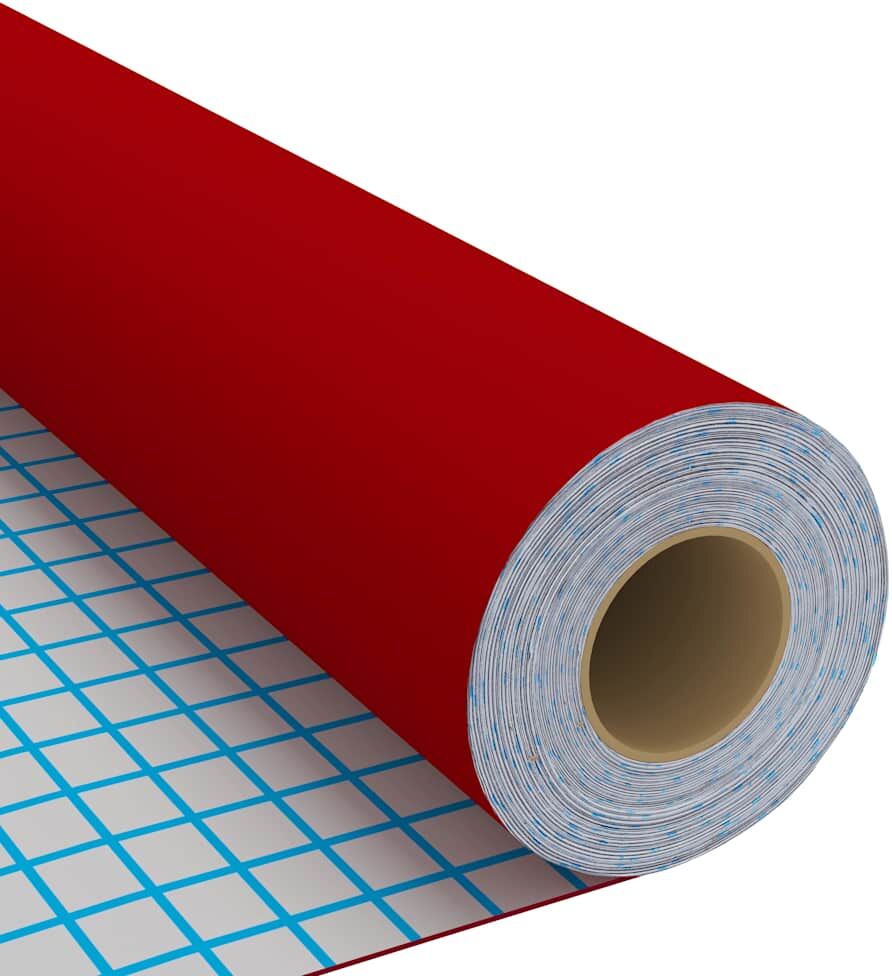
vidaXL Film autoadhésif pour meubles Rouge 500x90 cm PVCAméliorez simplement votre décoration intérieure avec ce film de meubles autocollant ! Nos films pour meubles universels sont parfaits pour portes, fenêtres, murs, meubles et tout ce qui a une surface lisse. Sa conception auto-adhésive garantit une application et un retrait faciles. Le matériau PVC peut résister à l'humidité, ce qui le rend facile à nettoyer avec un chiffon humide et offre donc une longue durabilité. Vous pouvez le couper en différentes tailles selon vos besoins. Faites votre mobilier neuf à nouveau à peu de frais ! Veuillez vous assurer que la surface sur laquelle vous appliquez les films est lisse et exempte de graisse et de poussière.12,80 €*Shipping: 0,00 €Secure redirect to the provider
-
What is Hess's law for standard formation enthalpy and combustion enthalpy?
Hess's law states that the total enthalpy change for a reaction is the same regardless of the number of steps taken to reach the final products. This principle can be applied to standard formation enthalpies and combustion enthalpies by using a series of known enthalpy changes to calculate the overall enthalpy change for a reaction. By manipulating and combining these known enthalpies, Hess's law allows us to determine the enthalpy change for reactions that may not be easily measured directly. **
-
How to calculate the reaction enthalpy from the molar bond enthalpy?
To calculate the reaction enthalpy from the molar bond enthalpy, you need to consider the difference between the sum of the bond enthalpies of the reactants and the sum of the bond enthalpies of the products. First, calculate the total bond enthalpy of all the bonds broken in the reactants, and then calculate the total bond enthalpy of all the bonds formed in the products. The reaction enthalpy is then the difference between these two values, with the bond enthalpies of the products subtracted from the bond enthalpies of the reactants. This calculation allows you to determine whether a reaction is exothermic (releasing heat) or endothermic (absorbing heat). **
-
What is Hess's law equation for standard formation enthalpy and combustion enthalpy?
Hess's law states that the overall enthalpy change for a reaction is the same regardless of the number of steps taken to reach the final products. For standard formation enthalpy, the equation is: ∆Hf°(products) = ∑∆Hf°(products) - ∑∆Hf°(reactants). For combustion enthalpy, the equation is: ∆Hcomb° = ∑∆Hf°(products) - ∑∆Hf°(reactants). These equations allow us to calculate the enthalpy change of a reaction using the enthalpies of formation of the reactants and products. **
-
What is the difference between standard enthalpy of formation and enthalpy change?
The standard enthalpy of formation is the enthalpy change that occurs when one mole of a compound is formed from its elements in their standard states. It is a specific type of enthalpy change that is measured under standard conditions. On the other hand, enthalpy change refers to the overall change in enthalpy of a system during a chemical reaction or process, which can include various types of enthalpy changes such as enthalpy of reaction, enthalpy of combustion, or enthalpy of solution. In summary, standard enthalpy of formation is a specific type of enthalpy change that relates to the formation of a compound from its elements, while enthalpy change is a broader term that encompasses various types of enthalpy changes in a system. **
* All prices are inclusive of VAT and, if applicable, plus shipping costs. The offer information is based on the details provided by the respective shop and is updated through automated processes. Real-time updates do not occur, so deviations can occur in individual cases. ** Note: Parts of this content were created by AI.